Dialysis Transport: A Comprehensive Guide to Safe and Reliable Rides in 2026

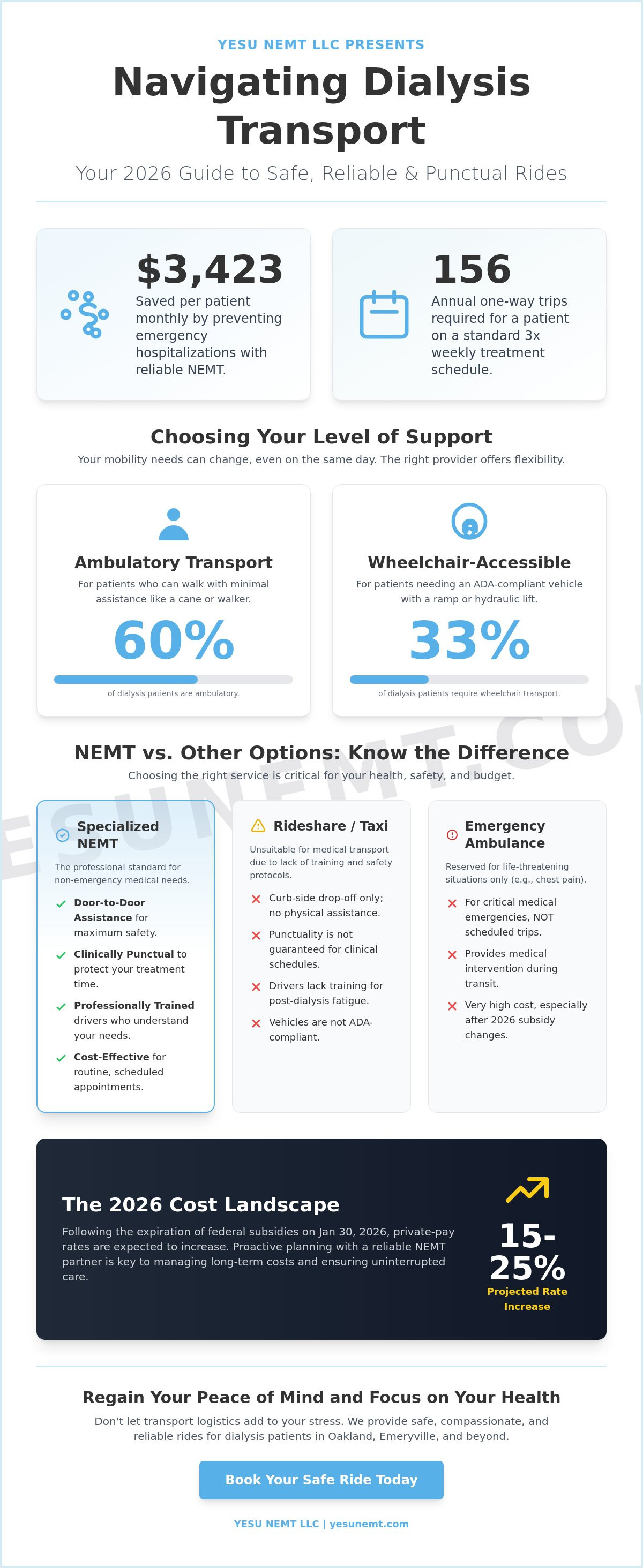
Did you know that reliable dialysis transport saves the healthcare system approximately $3,423 per patient every single month by preventing emergency hospitalizations? For the 156 one-way trips you require each year, the logistics often feel more exhausting than the clinical treatment itself. It's completely normal to feel anxious about a driver arriving late for your specific time slot or wondering how you'll manage the trip home when post-dialysis fatigue sets in. You deserve a partner who understands that these appointments are life-sustaining and require a higher standard of care.
We're here to help you regain your peace of mind and reduce the logistical burden on your family members. This guide explains everything you need to know about securing safe, dependable rides in 2026, including how to navigate the 15% to 25% increase in private-pay rates following the expiration of federal subsidies on January 30. We'll walk you through the differences between Medicaid and Medicare Advantage coverage, provide tips for choosing the right vehicle for your mobility needs, and show you how professional door-to-door assistance ensures your safety and well-being every step of the way.
Key Takeaways
Understand why clinical punctuality is a life-sustaining necessity and how specialized NEMT protects your treatment schedule from disruptive delays.
Identify whether ambulatory or wheelchair-accessible transport is the right choice for your physical needs to ensure a smooth, pleasant journey every time.
Learn how to navigate the 2026 cost landscape and manage recurring three-times-a-week scheduling without the burden of logistical fatigue.
Discover essential preparation steps for your dialysis transport, including setting the ideal pickup window and packing for clinic comfort.
See how door-to-door assistance and local knowledge of the I-880 and I-580 corridors provide safety and well-being for residents in Oakland and Emeryville.
Table of Contents
What is Dialysis Transport and Why is Reliability Critical?
Dialysis transport is a specialized form of non-emergency medical transportation (NEMT) designed for patients who require regular, life-sustaining treatments. Unlike a standard taxi or a rideshare app, these patient transport services prioritize clinical punctuality and passenger safety above all else. For a person living with kidney failure, a 15-minute delay isn't just an inconvenience; it's a direct risk to their health. Dialysis clinics operate on rigid schedules. If you arrive late, your "chair time" might be shortened to stay on track for the next patient, which prevents your body from being fully cleared of toxins and excess fluid.
Professional drivers in this field act as care partners rather than just operators. They provide door-to-door assistance, ensuring you're safely settled inside the clinic before they depart. This level of care is vital because dialysis is physically exhausting. After a four-hour session, patients often experience "post-dialysis washout," a state of extreme fatigue or dizziness. A standard driver might leave you at the curb, but a professional NEMT provider ensures your safety and well-being by helping you from the vehicle all the way to your front door. You can trust every step of the way when you have a driver who understands the unique physical toll of your treatment.
The High Stakes of Treatment Adherence
Missing even one appointment significantly increases the risk of hospitalization for those with End-Stage Renal Disease (ESRD). Data published on January 24, 2026, indicates that reliable dialysis transport saves the healthcare system $3,423 per patient every month by preventing emergency room visits caused by missed treatments. When a professional handles the commute, it removes a massive logistical burden from family members. This allows loved ones to focus on being a support system rather than worrying about traffic or the dangers of post-treatment fatigue.
NEMT vs. Emergency Ambulance: Knowing the Difference
It's vital to understand when to schedule a dialysis transport van versus calling 911. NEMT is designed for stable patients who need a reliable way to reach scheduled appointments. These vehicles are equipped for comfort and accessibility but don't provide medical intervention during the ride. If you experience chest pain or acute shortness of breath, you must call for an emergency ambulance. However, for the 156 one-way trips you need annually, NEMT is the most cost-effective choice. Following the expiration of federal subsidies on January 30, 2026, private-pay ambulance rates have climbed by up to 25%, making specialized NEMT a more sustainable long-term solution for routine care.
Ambulatory vs. Wheelchair Transport: Choosing Your Level of Support
Choosing the right mode of dialysis transport depends entirely on your physical stamina and mobility needs on any given day. While 60% of dialysis patients are ambulatory, approximately 33% require a wheelchair-accessible vehicle according to industry data from January 24, 2026. This distinction is critical because your needs might shift between your morning drop-off and your afternoon pickup. You might feel strong enough to walk into the clinic with a cane at 7:00 AM, but the physical exhaustion following treatment often makes the return trip much more challenging. Selecting a provider that offers both ambulatory and wheelchair options ensures you're never stranded if your physical state changes during your session.
A government report on Non-Emergency Transportation for Dialysis Patients highlights that having access to these varied service levels is a key factor in consistent treatment attendance. For those who can walk with minimal assistance, ambulatory transport provides a steady hand and professional supervision. It isn't just about the ride; it's about having a compassionate partner who understands that a simple curb can feel like a mountain after a long treatment day. If you need a smooth and pleasant journey that adapts to your energy levels, choosing a specialized medical transport service is the safest path forward.
The Anatomy of a Safe Medical Transport Van
Every wheelchair-accessible van must adhere to strict ADA-compliant safety standards, featuring hydraulic lifts or specialized ramps that are rigorously tested for weight capacity and reliability. We utilize 4-point tie-down systems that secure the wheelchair directly to the vehicle floor, paired with integrated lap and shoulder belts to ensure maximum passenger security during transit. These vehicles also feature advanced climate control systems to maintain a stable, comfortable temperature. This is essential for patients whose circulation and temperature regulation are affected by their condition. High-quality seating and professional suspension systems further reduce the physical jar of the commute across the SF Bay Area.
Door-to-Door Assistance: The Gold Standard of Care
Standard transportation services often only offer "curb-to-curb" service, which leaves you at the sidewalk to navigate the rest of the way alone. For dialysis patients, the gold standard is door-to-door assistance. This means your driver helps you from your living room, through your front door, and directly into the clinic's waiting area. This hands-on approach significantly reduces fall risks, which is vital since over half of dialysis patients are 65 or older. Drivers can even assist with the initial check-in process, ensuring the clinic staff knows you've arrived safely and on time for your scheduled slot.
Overcoming Dialysis Logistics: Scheduling and Costs
Managing the costs and scheduling for 156 one-way trips every year is a significant undertaking for any family. While Medicaid provides comprehensive coverage for medically necessary appointments, Original Medicare does not cover routine dialysis transport. This leaves many patients relying on Medicare Advantage plans, which often cap benefits at 24 to 60 one-way trips annually. For a patient requiring three sessions a week, these benefits are often exhausted in just a few months. Understanding these Non-emergency medical transportation services is the first step toward building a sustainable long-term care plan.
Investing in professional transport is a proactive health decision that protects your long-term well-being. As mentioned earlier, missing treatments costs the healthcare system an estimated $3,423 monthly in preventable hospitalizations. However, the "Ambulance Funding Cliff" that occurred on January 30, 2026, has pushed private-pay rates up by 15% to 25%. To manage these rising costs and avoid the stress of daily logistics, many families opt for recurring, flat-rate bookings. This approach eliminates "booking fatigue" and ensures a driver is locked into your schedule, providing a dependable rhythm for your life-sustaining care.
Navigating Insurance and Payment Options
Medicare Part B only covers ambulance transportation when a patient’s condition is so severe that any other form of transit could endanger their health. For most ambulatory or wheelchair-using patients, this means routine trips are an out-of-pocket or supplemental insurance expense. We work closely with families to establish budget-conscious schedules that prioritize safety without the stress of daily price fluctuations. By setting up a recurring account, you ensure that your well-being remains the top priority while keeping administrative tasks to a minimum. It's a professional solution that offers quiet confidence for both patients and their caregivers.
Coordinating with Social Workers and Clinic Staff
Your clinic’s social worker is an invaluable ally in arranging your commute. They help verify insurance eligibility and can assist in bridging the gap between your medical needs and your transportation options. We coordinate directly with dialysis centers in Emeryville and Oakland to stay updated on any shift changes or holiday closures. By creating a personalized transportation profile, we document your specific needs, such as preferred pickup locations or mobility requirements. This ensures you receive consistent, compassionate care every single time you step into one of our vehicles, giving you one less thing to worry about during your treatment week.
How to Prepare for a Smooth Dialysis Transport Experience
A successful trip to the clinic begins long before our vehicle arrives at your door. Proper preparation ensures that your dialysis transport is as stress-free as possible, allowing you to focus entirely on your health. We recommend being ready at least 15 minutes before your scheduled pickup window. This small buffer accounts for unexpected traffic patterns in Alameda County and ensures you arrive at the clinic with plenty of time to check in. When you're prepared early, it sets a calm tone for the rest of your day and helps maintain the punctuality of the entire treatment schedule.
Communication with your driver is another vital element of a safe journey. Don't hesitate to share how you're feeling, especially if you have a history of dizziness or low blood pressure after a session. Our drivers act as compassionate care partners; they're trained to monitor your safety and well-being throughout the ride. Before the van arrives, perform a quick safety check of your mobility equipment. Ensure your wheelchair is in good repair and that your home's walkway is clear of debris or tripping hazards. If you're ready to experience a higher standard of care, you can schedule your dialysis transport with our professional team today.
The Day-of-Treatment Checklist
Confirm the evening before: Double-check your pickup time to ensure your schedule aligns with the clinic's expectations.
Pack essential items: Bring your medications, a warm blanket for the cold clinic environment, and any kidney-friendly snacks allowed by your care team.
Dress for comfort: Wear loose-fitting clothing that allows easy access to your dialysis port or fistula during your four-hour treatment.
Clear the path: Ensure your driveway or ramp is accessible for our specialized vehicles to provide seamless door-to-door assistance.
The Post-Dialysis Recovery Phase
The return trip is often the most critical window for passenger safety. Many patients experience "post-pump" fatigue or sudden drops in blood pressure, known as hypotension, immediately following treatment. Because over 51% of dialysis patients are 65 or older, the risk of a fall during this recovery phase is significantly higher. Our drivers follow strict protocols to monitor for signs of exhaustion or distress during transit. We don't just drop you at the curb; we provide the final step of the journey by helping you transition safely back into the comfort of your home. This dedicated support allows you to trust every step of the way, knowing your safety is our top priority until you're settled and secure.
Specialized Dialysis Rides in Emeryville and Oakland
Navigating the I-880 and I-580 corridors requires more than just a GPS; it demands a deep familiarity with the unique traffic patterns of the East Bay. We understand that a sudden backup at the MacArthur Maze or congestion near the Port of Oakland can create immense anxiety when you have a strict treatment window. Our drivers utilize their local knowledge to bypass these regional bottlenecks, ensuring your arrival is both timely and stress-free. This specialized expertise is a cornerstone of our Dialysis appointment transportation in Emeryville, where every minute counts toward your clinical success.
We serve as a vital link between residential neighborhoods and the major medical hubs that define our community. From the specialized clinics in Emeryville to the prominent medical centers in downtown Oakland, our team provides a "local hero" approach to dialysis transport. We aren't a detached corporate entity; we're a neighbor who understands the specific needs of Alameda County residents. This localized focus allows us to build lasting relationships with patients and clinic staff alike, fostering a level of trust that standard transportation services simply can't match. You can rely on us to be there, rain or shine, through every shift in the Bay Area weather.
Trusted Care in Alameda County
Our commitment to excellence extends across Berkeley, Oakland, and the city of Alameda, where we tailor our services to the diverse needs of our seniors and neighbors with disabilities. We believe that professional drivers should be more than just operators; they should be familiar with the local medical landscape and the specific layouts of the facilities they serve. This knowledge streamlines the drop-off and pickup process, reducing the time you spend waiting in the elements. Our goal is to provide a smooth and pleasant journey that honors your dignity while maintaining your safety and well-being as our absolute top priorities.
Booking Your Reliable Dialysis Ride Today
Securing a dependable partner for your recurring medical needs shouldn't be a source of stress. We've simplified the process to help you or your loved ones establish a consistent schedule that fits your life. When you contact us for a quote, we take the time to understand your specific mobility requirements, insurance details, and preferred pickup windows. What sets us apart is our earnest desire to serve the community with compassion and quiet confidence. We're ready to help you reduce the logistical burden on your family and ensure you never miss a vital treatment slot again. Schedule your reliable dialysis transport with YESU NEMT and trust every step of the way.
Secure Your Path to Better Health
Reliable transportation is a clinical necessity that directly impacts your treatment success and long-term health. You've learned how specialized door-to-door assistance prevents the dangers of post-dialysis fatigue and how local knowledge of the I-880 corridor ensures you never miss a vital chair time. By choosing a partner who understands the unique physical toll of your appointments, you reduce the logistical burden on your family and protect your well-being. It's about more than just a ride; it's about ensuring your safety during the most vulnerable moments of your recovery.
Since 2022, we've served Alameda County, Oakland, and the greater SF Bay Area with a focus on safety and quiet confidence. Our fleet of ADA-compliant wheelchair-accessible vans is ready to provide the dependable dialysis transport you deserve. You don't have to manage these complex logistics alone. Book Your Reliable Dialysis Transport with YESU NEMT LLC today and let us handle the road while you focus on your recovery. We're here to support you with compassion and professional care every single day. Your health is our priority, and we're honored to be your care partner.
Frequently Asked Questions
Does Medicare pay for dialysis transportation?
Original Medicare Part B generally doesn't cover routine, non-emergency rides to clinics. It typically only pays for ambulance services if your health condition is so severe that any other form of transit would be dangerous. However, in 2026, approximately 85% of Medicare Advantage (Part C) plans offer a transportation benefit. These plans often have annual caps ranging from 24 to 60 one-way trips, so it's vital to verify your specific coverage limits before scheduling your dialysis transport.
How far in advance should I book my dialysis transport?
We recommend booking your ride at least 24 to 48 hours in advance to guarantee your preferred time slot. For long-term patients, the most dependable approach is setting up a recurring schedule that aligns with your three-day-a-week treatment plan. This eliminates the stress of "booking fatigue" and ensures a professional driver is always locked into your calendar. Our team works closely with families in Oakland and Emeryville to manage these recurring logistics with quiet confidence.
Can a family member ride with the patient during dialysis transport?
Yes, one family member or caregiver is usually welcome to ride along at no additional cost. Having a familiar support person can significantly reduce the anxiety often associated with medical appointments and hospital discharges. This extra layer of emotional support contributes to the passenger's well-being and helps ensure a smooth transition from the vehicle to the clinical environment.
What happens if my dialysis treatment runs late?
We understand that clinical procedures don't always follow a perfect clock. If your session runs over, our dispatch team coordinates with the driver to adjust your pickup window. We maintain active communication with clinic staff across the SF Bay Area to ensure you're never left waiting alone while experiencing post-treatment fatigue. Our goal is to provide a dependable conclusion to your journey, regardless of clinical delays.
Is wheelchair transportation available for patients who can't transfer to a seat?
Yes, our specialized wheelchair-accessible vehicles are designed specifically for passengers who must remain in their chairs. These vans feature ADA-compliant hydraulic lifts and professional 4-point tie-down systems that secure the chair directly to the vehicle floor. This eliminates the physical strain and fall risks associated with manual transfers, providing a safer experience for patients with limited mobility.
How do you ensure the safety of patients who are very weak after treatment?
Our drivers are trained as "Reliable Caregivers" to monitor for signs of "post-pump" fatigue or dizziness. We provide hands-on, door-to-door assistance to ensure you're safely escorted from the clinic chair and settled securely back inside your home. This protective approach is essential for the 51% of dialysis patients who are 65 or older and may be prone to hypotension or instability following their session.
Do you provide transport to dialysis centers in San Francisco?
While our primary focus is serving the Alameda County community, we do provide transportation to major medical centers across the Bay Bridge. We utilize our local knowledge of the I-80 corridor to navigate bridge traffic and ensure you arrive on time for your appointment. This allows East Bay residents to access specialized care in San Francisco without the stress of managing the complex commute themselves.
What is the difference between curb-to-curb and door-to-door service?
Curb-to-curb service only requires the driver to meet you at the sidewalk, leaving you to navigate the rest of the way alone. Our door-to-door assistance is a more comprehensive standard of care where the driver helps you from inside your living room and escorts you directly into the clinic's waiting area. This hands-on support is vital for dialysis patients who need a steady hand during the transition from their home to the vehicle.


Comments